
Micro Merchant Loan

Micro Merchant Loan

UX Case Study

UX Case Study

May - July '25 · UI/UX Intern · Figma

May - July '25 · UI/UX Intern · Figma

Why This Product Exists

Why This Product Exists

Most fintech platforms in India offer loans to merchants where these products are typically designed for larger loan amounts and longer repayment cycles. However, internal data revealed a different pattern of how a big user base of Paytm’s merchants were low-income, small-scale business owners who preferred smaller, short-term loans that could be repaid quickly.

This insight led to the opportunity to design a micro-loan experience tailored specifically to this underserved user group; a one of a kind product in the fintech market in India.

At the same time, this new product became a chance to rethink and improve the existing lending experience, which had some usability gaps.

Most fintech platforms in India offer loans to merchants where these products are typically designed for larger loan amounts and longer repayment cycles. However, internal data revealed a different pattern of how a big user base of Paytm’s merchants were low-income, small-scale business owners who preferred smaller, short-term loans that could be repaid quickly.

This insight led to the opportunity to design a micro-loan experience tailored specifically to this underserved user group; a one of a kind product in the fintech market in India.

At the same time, this new product became a chance to rethink and improve the existing lending experience, which had some usability gaps.

The Problem

The Problem

By examining internal data and existing customer challenges, product and business leads identified a clear opportunity of shaping the initial direction for a new micro-loan product which led to the key question;

How might we design a micro-loan experience for low-income merchants that is easy to understand, transparent and trustworthy, and quick to apply for and repay while also improving the existing experience?

By examining internal data and existing customer challenges, product and business leads identified a clear opportunity of shaping the initial direction for a new micro-loan product which led to the key question;

How might we design a micro-loan experience for low-income merchants that is easy to understand, transparent and trustworthy, and quick to apply for and repay while also improving the existing experience?

UX Research

UX Research

UX Audit

UX Audit

As a new designer on the team, I began with a UX audit of the current product. This helped me identify friction points in the exisiting flow, understand what was working and find areas of improvement. This step helped make sure the new experience was built on what already exists, instead of starting from scratch.

As a new designer on the team, I began with a UX audit of the current product. This helped me identify friction points in the exisiting flow, understand what was working and find areas of improvement. This step helped make sure the new experience was built on what already exists, instead of starting from scratch.

Key Findings

Key Findings

Lack of Loan Awareness

Lack of Loan Awareness

Users didn’t understand loan timelines, deductions, or required documents.

Users didn’t understand loan timelines, deductions, or required documents.

Overwhelming Landing Page

Overwhelming Landing Page

Overwhelming Landing Page

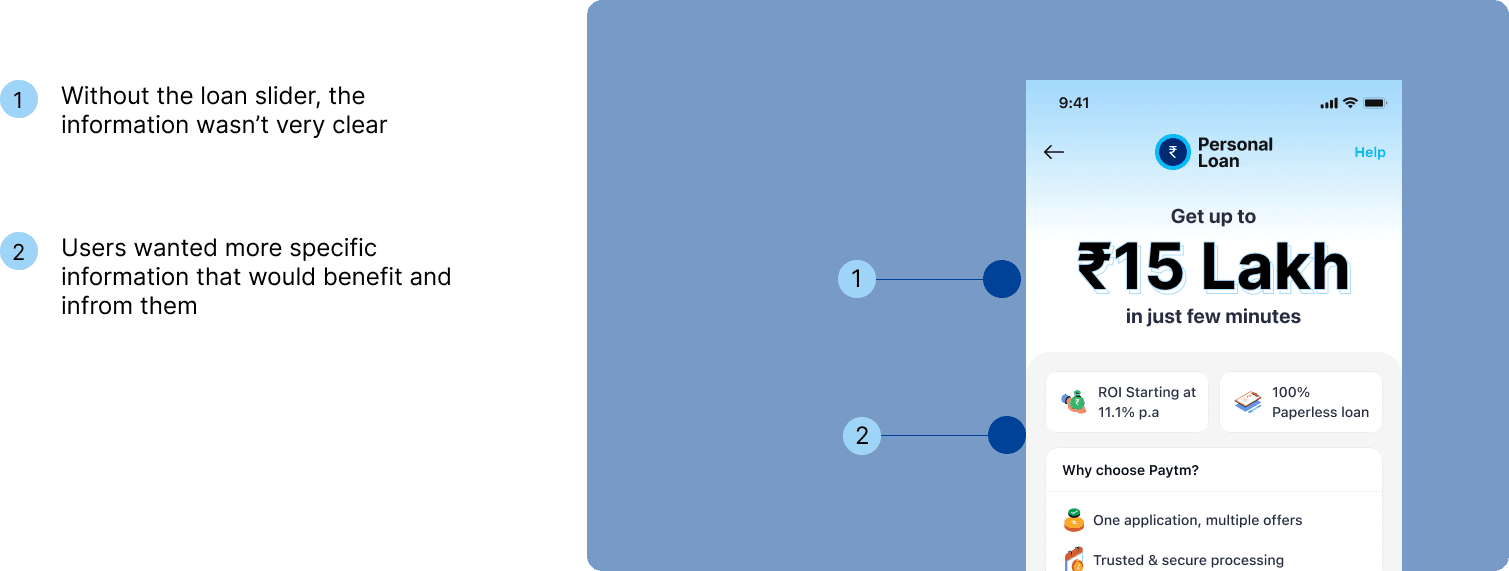
The landing page was text-heavy and lacked clarity. It didn’t clearly explain loan benefits, repayment methods, or user requirements, leaving users overwhelmed.

The landing page was text-heavy and lacked clarity. It didn’t clearly explain loan benefits, repayment methods, or user requirements, leaving users overwhelmed.

No Feedback During WaitTimes

No Feedback During WaitTimes

No progress indicators during key steps led users to think the app had frozen.

No progress indicators during key steps led users to think the app had frozen.

Competitive Analysis

Competitive Analysis

To position this product effectively, I analyzed how other fintech platforms approached merchant lending. This helped understand

  • A heavy focus on larger loan offerings

  • Limited support for first-time or low-income borrowers

  • Lack of clear, educational onboardi

To position this product effectively, I analyzed how other fintech platforms approached merchant lending. This helped understand

  • A heavy focus on larger loan offerings

  • Limited support for first-time or low-income borrowers

  • Lack of clear, educational onboardi

Bharat Pay

Bharat Pay

BharatPe is optimized for Tier 2/3 users through quick onboarding, minimal documentation, and transaction-based approvals, making the process fast.

BharatPe is optimized for Tier 2/3 users through quick onboarding, minimal documentation, and transaction-based approvals, making the process fast.

CRED

CRED

CRED focuses on delight, leveraging animations, micro interactions, and gamified feedback to make financial actions feel light, engaging, and premium.

CRED focuses on delight, leveraging animations, micro interactions, and gamified feedback to make financial actions feel light, engaging, and premium.

Phone Pe

Phone Pe focuses on clean UI including merchant dashboard UI and multilingual support. The merchant loans are based on transaction history.

Phone Pe focuses on clean UI including merchant dashboard UI and multilingual support. The merchant loans are based on transaction history.

Understanding The User

Understanding The User

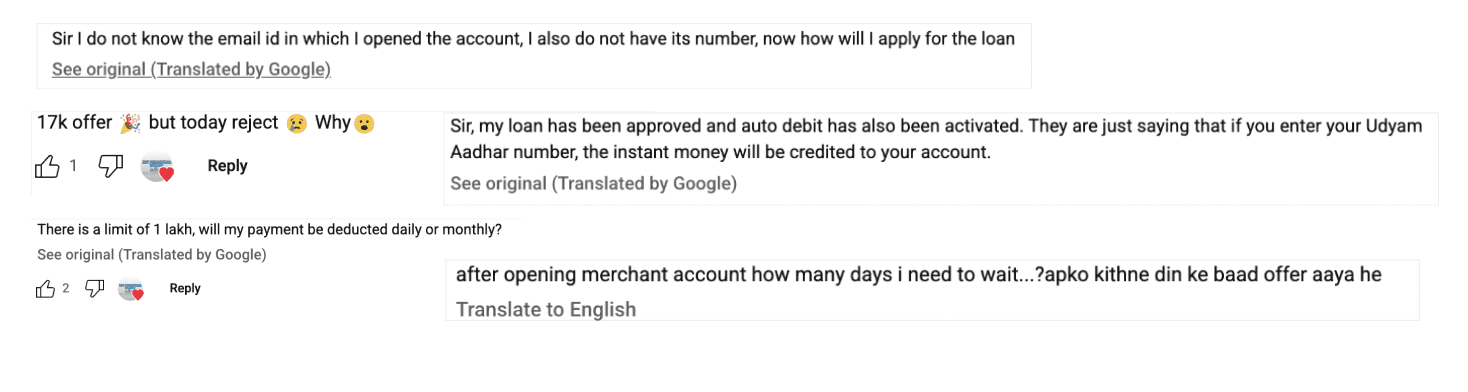
The main goal for this project was understanding the users and how they think. I explored real-world user behavior through Youtube. Many creators publish videos in Hindi and simplified English explaining how merchant loans works. These videos target users who are not fluent in English, are new to digital financial systems or who learn through easy explanations.

I analyzed the comment section of these videos to understand user tone, the language they communicate in and exactly where they get stuck.

The main goal for this project was understanding the users and how they think. I explored real-world user behavior through Youtube. Many creators publish videos in Hindi and simplified English explaining how merchant loans works. These videos target users who are not fluent in English, are new to digital financial systems or who learn through easy explanations.

I analyzed the comment section of these videos to understand user tone, the language they communicate in and exactly where they get stuck.

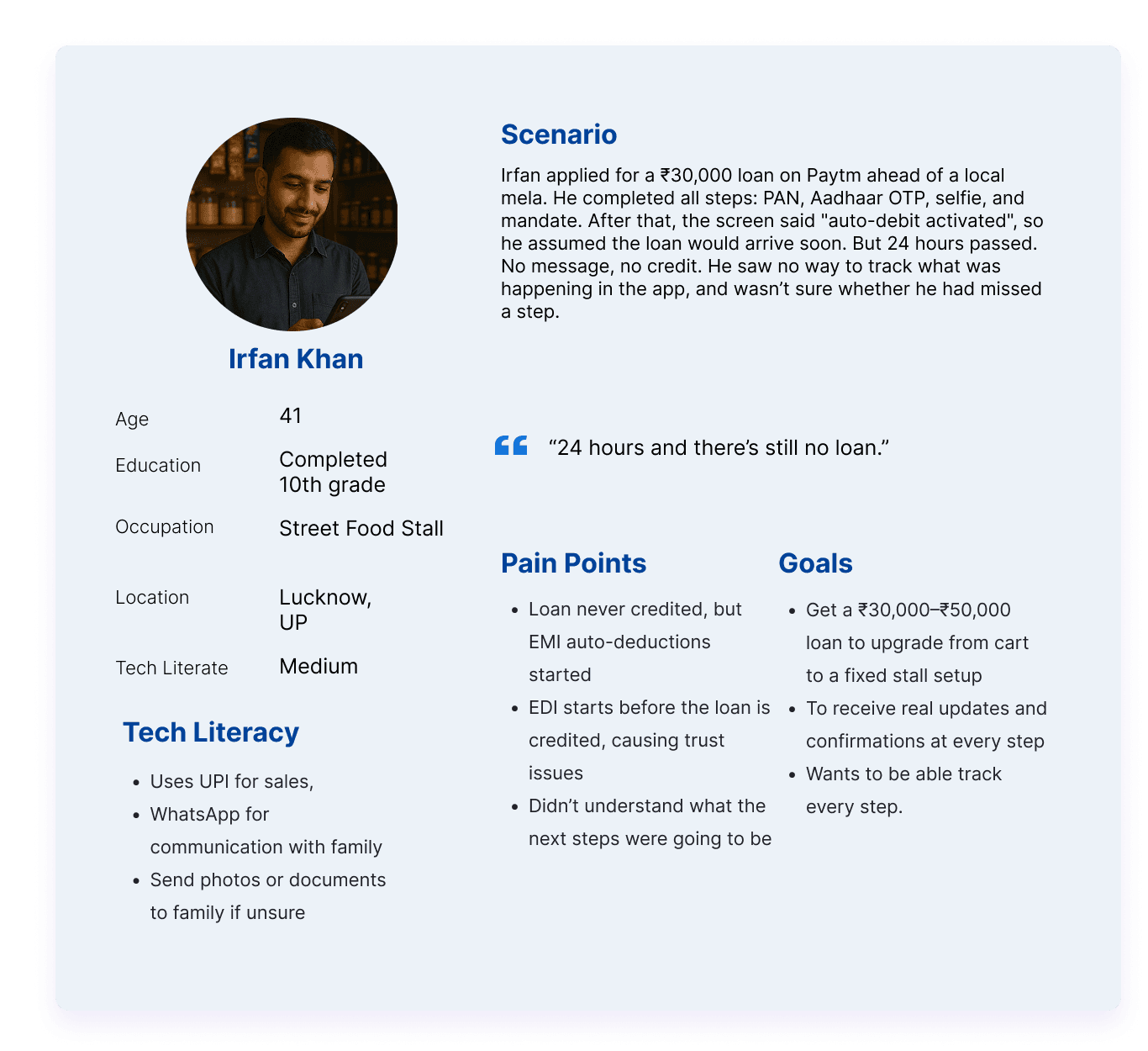
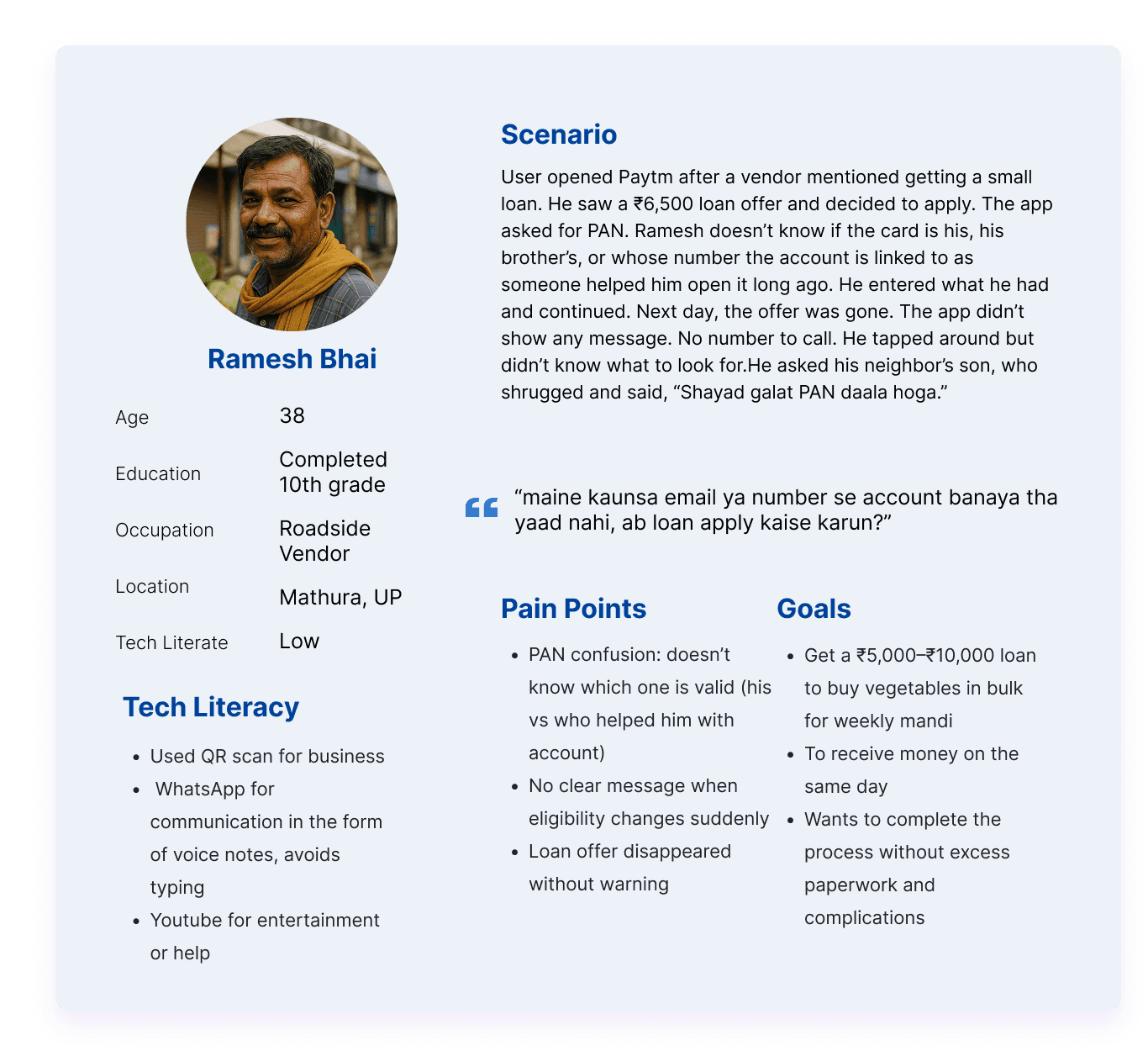
User Personas

User Personas

Key Design Decision- Photo Gallery (Product Detail Page)

Key Design Decision- Photo Gallery (Product Detail Page)

We focused on increasing visual transparency to help students feel more confident in their choices by placing a photo gallery at the top of each dorm page that opens into a collection of student-submitted photos showing real rooms, shared spaces, and amenities to give a clearer and more trustworthy view of dorm life.

We focused on increasing visual transparency to help students feel more confident in their choices by placing a photo gallery at the top of each dorm page that opens into a collection of student-submitted photos showing real rooms, shared spaces, and amenities to give a clearer and more trustworthy view of dorm life.

What Guided My Design Decisions

What Guided My Design Decisions

Clarity over complexity - Using simple, familiar language to avoid overwhelming users unfamiliar with financial terms.
Education upfront - Clearly explaining what a micro-loan is and how it works before users enter the flow.
Transparency builds trust - Surfacing key details like loan amount, tenure, and interest rate early on

Clarity over complexity - Using simple, familiar language to avoid overwhelming users unfamiliar with financial terms.
Education upfront - Clearly explaining what a micro-loan is and how it works before users enter the flow.
Transparency builds trust - Surfacing key details like loan amount, tenure, and interest rate early on

Wireframes

Wireframes

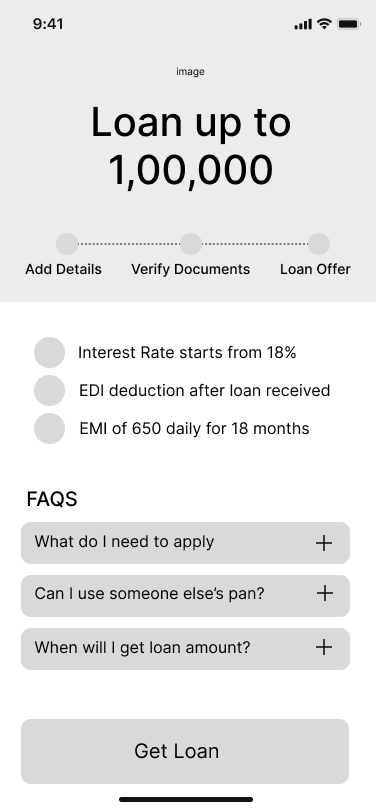
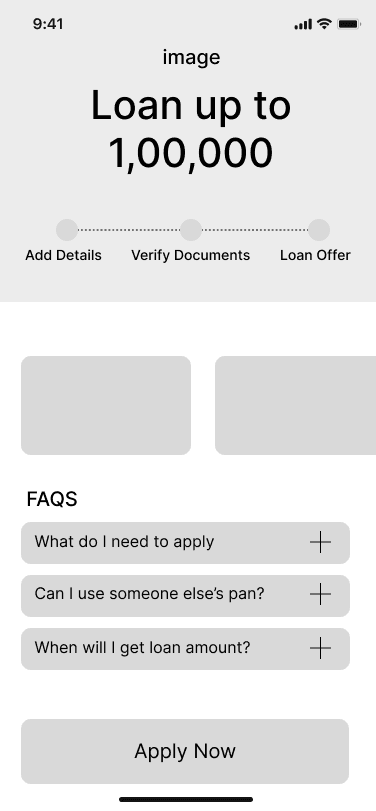
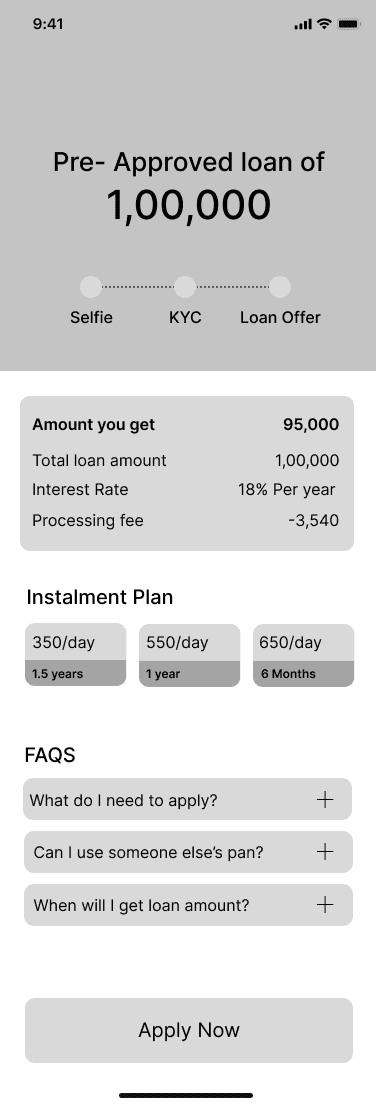
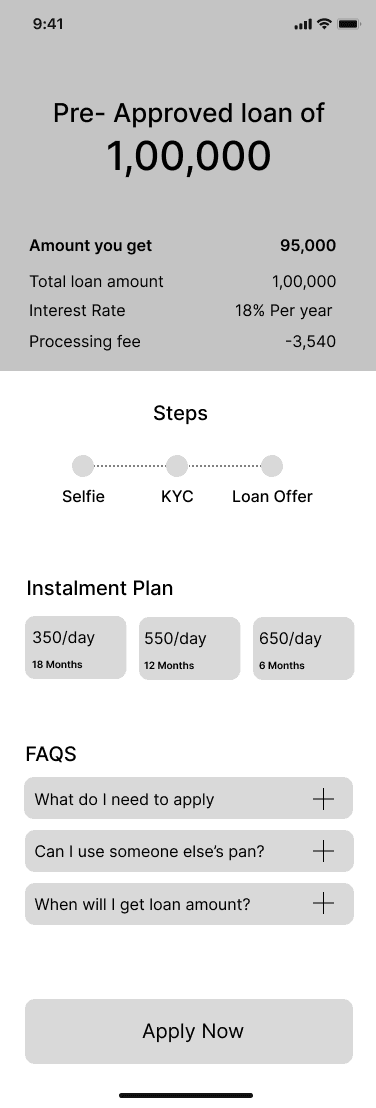
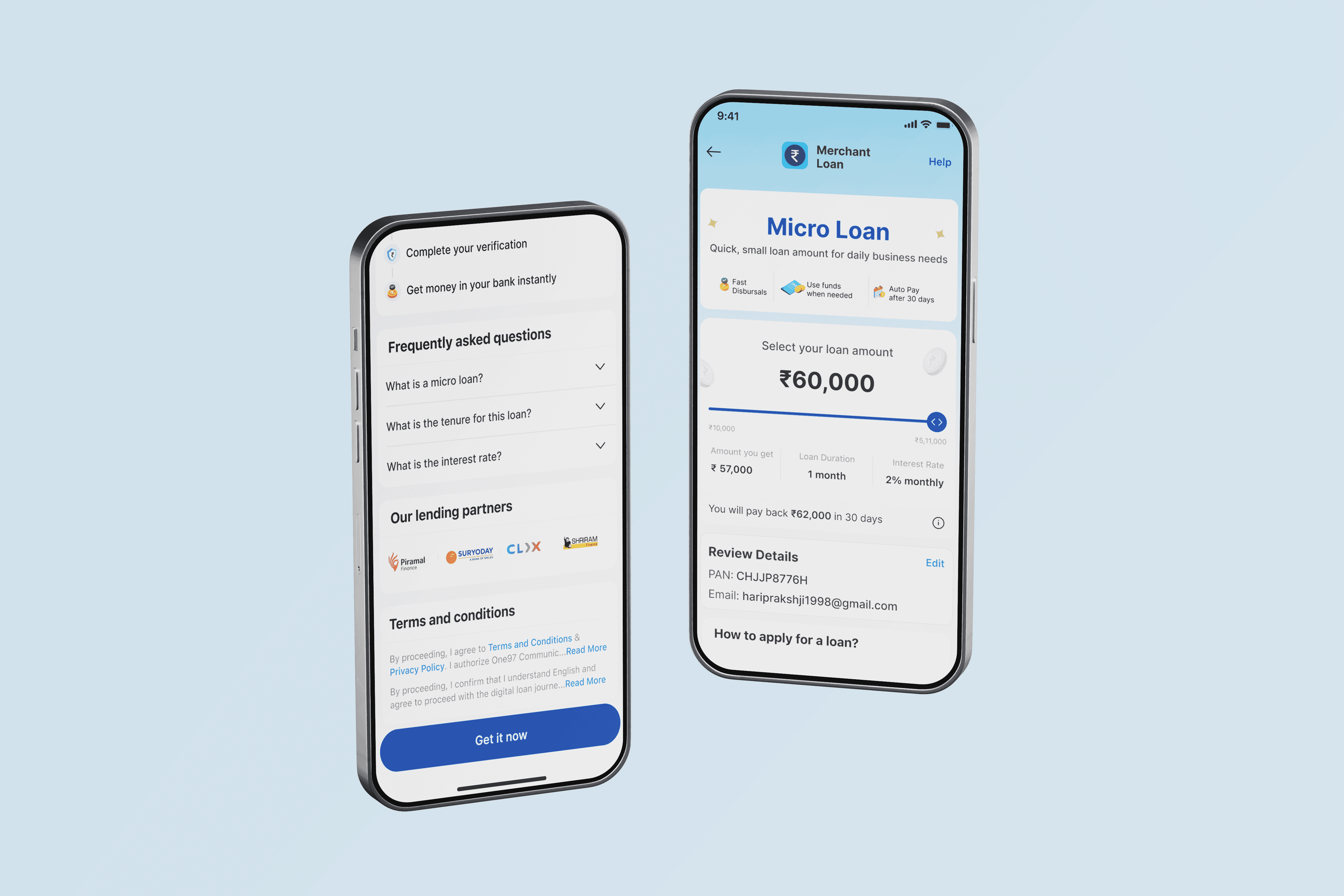
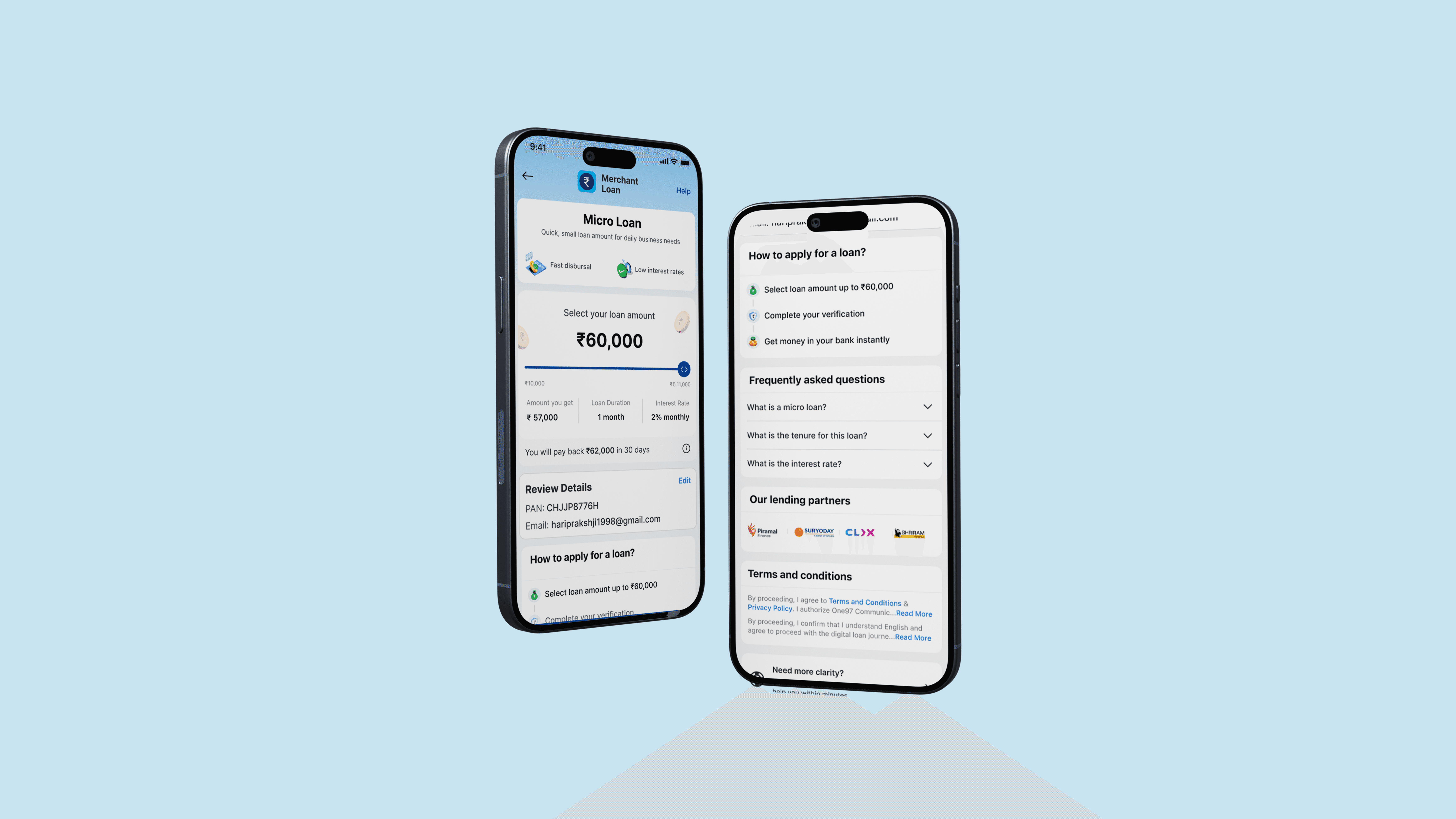
I created wireframes to address key moments of confusion and drop-off in the flow. My main focus was on designing the landing page to clearly communicate the product and provide users with the information they need upfront.

I worked through quick iterations to test whether the direction was effective. By sharing these with product and business teams, I gathered feedback to ensure the solution was clear and aligned with the problem we were trying to solve.

I created wireframes to address key moments of confusion and drop-off in the flow. My main focus was on designing the landing page to clearly communicate the product and provide users with the information they need upfront.

I worked through quick iterations to test whether the direction was effective. By sharing these with product and business teams, I gathered feedback to ensure the solution was clear and aligned with the problem we were trying to solve.

HI-Fidelity Wireframes

HI-Fidelity Wireframes

What Guided My Design Decisions

Clarity over complexity - Using simple, familiar language to avoid overwhelming users unfamiliar with financial terms.
Education upfront - Clearly explaining what a micro-loan is and how it works before users enter the flow.
Transparency builds trust - Surfacing key details like loan amount, tenure, and interest rate early on